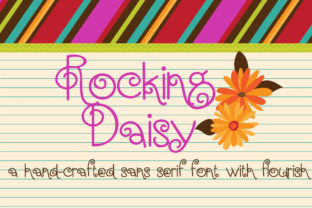
Rocking Daisy: A Whimsical Touch for Creative Projects
In the world of typography, Rocking Daisy stands out as a unique and expressive font that brings a touch of whimsy to any design. This hand-written sans serif font features curl-infused strokes that give it a soft, playful feel. Whether you're working on a personal project or a professional design, Rocking Daisy offers a distinctive style that can elevate your work.
Designed with a focus on creativity and individuality, Rocking Daisy is ideal for those who want to add a personal and artistic flair to their designs. Its fluid lines and organic shapes make it perfect for branding, invitations, and other visual materials that require a friendly and approachable look. The font's natural appearance makes it easy to read while still maintaining a sense of charm and character.
Understanding the Needs and Goals of Designers
Designers and creatives often seek fonts that not only look good but also serve a specific purpose. Rocking Daisy caters to those who want to convey warmth, personality, and a sense of playfulness in their work. It's particularly useful for projects that aim to connect emotionally with the audience, such as children's books, wedding invitations, or promotional materials for creative businesses.
However, using Rocking Daisy effectively requires understanding its strengths and limitations. While it adds a unique aesthetic, it may not be suitable for all types of content. For instance, it might not be the best choice for long blocks of text due to its cursive-like nature, which can affect readability. Instead, it shines when used strategically, such as in headlines, logos, or short phrases where visual impact is key.
How Rocking Daisy Can Help in Different Scenarios
For small business owners looking to create a brand identity, Rocking Daisy can be a valuable tool. It allows them to express their personality without relying on more traditional, corporate fonts. By incorporating this font into their logos, packaging, or marketing materials, they can differentiate themselves from competitors and appeal to a more creative or niche audience.
Similarly, designers working on personal projects, such as blogs, social media posts, or art portfolios, can use Rocking Daisy to add a unique touch that reflects their style. It's an excellent choice for those who want to stand out and showcase their individuality through typography.
Practical Applications and Outcomes
Rocking Daisy is versatile enough to be used across various mediums. In print, it can be found on business cards, brochures, and posters, adding a touch of elegance and creativity. On digital platforms, it works well for website headers, banners, and social media graphics, helping to create a cohesive and visually appealing brand presence.
One of the most effective ways to use Rocking Daisy is in combination with other fonts. Pairing it with a more neutral typeface can balance its whimsical nature while maintaining a professional look. For example, using Rocking Daisy for a headline and a standard sans serif for body text can create a clean and modern design that still feels personal and engaging.
Examples and Recommendations
Consider using Rocking Daisy for a children's book title, where its playful style can capture the imagination of young readers. It could also be used in a boutique's logo, giving the brand a warm and inviting feel. In both cases, the font enhances the overall message and tone of the design.
When selecting Rocking Daisy for a project, it's important to consider the context and audience. For a more formal setting, such as a corporate report or academic paper, it may not be appropriate. However, for creative or casual projects, it can be a powerful tool for expression and differentiation.
Considering Different Approaches
Users may approach Rocking Daisy differently based on their goals and preferences. Some may use it as a primary font for a bold statement, while others may incorporate it subtly to add texture and interest. Experimentation is key to finding the right balance and ensuring that the font enhances, rather than overwhelms, the design.
Additionally, users should consider the availability of the font. Rocking Daisy may be available through various font marketplaces or design platforms. Ensuring that it is properly licensed for the intended use is essential to avoid legal issues and maintain professionalism.
Conclusion
Rocking Daisy is more than just a font—it's a creative tool that can bring a fresh and original perspective to design projects. Its unique style and expressive qualities make it ideal for those seeking to add a personal touch to their work. By understanding its strengths and applications, users can effectively leverage Rocking Daisy to achieve their design goals and connect with their audience in a meaningful way.