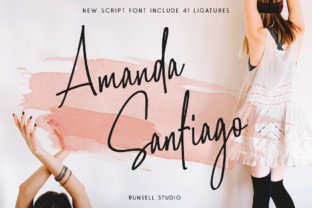
Amanda Santiago: A Handcrafted Script Font for Authentic Design
Amanda Santiago is a script font that brings a handcrafted, authentic feel to design projects. Its flowing lines and natural character make it ideal for applications where a personal touch is desired. Whether used in logos, invitations, or headers, this font adds a unique aesthetic that stands out from more rigid typefaces.
What Makes Amanda Santiago Unique
The appeal of Amanda Santiago lies in its organic structure and the way it mimics handwritten text. Unlike many digital fonts that aim for uniformity, this one embraces slight variations in stroke weight and spacing, giving it a more human quality. This characteristic makes it particularly well-suited for designs that emphasize individuality and creativity.
Available in five distinct styles, Amanda Santiago offers flexibility for different design needs. From bold and dramatic to delicate and refined, each variation caters to specific visual goals. This range allows designers to select the most appropriate version based on the context and tone they wish to convey.
Comparing Amanda Santiago to Similar Fonts
When considering script fonts, there are several alternatives that offer similar qualities. Fonts like Brush Script or Lobster provide a comparable handcrafted look but may differ in their level of formality or legibility. Amanda Santiago strikes a balance between elegance and readability, making it a versatile choice for both print and digital media.
Some script fonts prioritize a more stylized appearance, often at the expense of clarity. In contrast, Amanda Santiago maintains a clear structure while still retaining its artistic flair. This makes it a practical option for projects where both aesthetics and readability are important, such as website headers or signage.
Best Use Cases for Amanda Santiago
Amanda Santiago excels in scenarios where a personal or artistic touch is needed. For instance, wedding invitations often benefit from its elegant curves and warm feel. The font can also enhance logotypes by adding a sense of authenticity and craftsmanship. Its versatility extends to quote art, where it can bring a thoughtful, handwritten quality to displayed text.
Designers working on branding projects may find Amanda Santiago useful for creating a distinctive identity. Its multiple styles allow for consistent yet varied application across different brand elements. However, it’s important to consider the context—using it in large blocks of text might reduce readability, so it’s best suited for short phrases or focal points.
Strengths and Tradeoffs
One of the main strengths of Amanda Santiago is its ability to add a human element to digital designs. This can be especially valuable in industries that rely on emotional connection, such as fashion, art, or event planning. The font’s natural flow can evoke a sense of warmth and approachability that more mechanical typefaces lack.
However, its handcrafted nature may not always align with every design objective. For example, in highly technical or corporate environments, a more structured font might be more appropriate. Additionally, the font’s stylistic features could require careful pairing with other typefaces to ensure visual harmony.
When Amanda Santiago Is the Right Choice
Amanda Santiago is an excellent choice when the goal is to create a personal or artistic impression. It works well for projects that emphasize creativity, such as independent branding, custom illustrations, or artisanal products. Its adaptability across different styles means it can fit into a wide range of design themes without losing its core character.
For example, a small business owner looking to create a unique logo might choose Amanda Santiago to differentiate their brand from competitors. Similarly, a designer working on a wedding theme could use it to add a bespoke feel to stationery or promotional materials. In these situations, the font’s distinctiveness becomes an asset rather than a limitation.
Alternatives to Consider
While Amanda Santiago offers a compelling set of features, there are other fonts that may better suit certain needs. For instance, if a more modern or minimalist look is desired, a sans-serif font might be more appropriate. Alternatively, for a more ornate style, fonts with intricate details could be a better fit.
Designers should also consider the availability and licensing of fonts. Some alternatives may offer broader platform support or more extensive character sets, which could be important for multilingual projects. Evaluating these factors alongside the visual appeal of Amanda Santiago can help in making a more informed decision.
Decision Factors for Choosing Amanda Santiago
When deciding whether to use Amanda Santiago, several factors should be taken into account. The intended audience plays a significant role—designs targeting younger or more creative demographics may benefit from its expressive style. On the other hand, professional or formal settings might require a more restrained typeface.
Another consideration is the medium in which the font will be used. Digital platforms may have different requirements compared to print materials, and the font’s performance in each format should be tested. Additionally, the overall design composition should be evaluated to ensure that Amanda Santiago complements other visual elements rather than clashing with them.
Conclusion: A Thoughtful Addition to Any Designer’s Toolkit
Amanda Santiago is a font that brings a unique blend of authenticity and versatility to design work. Its handcrafted aesthetic makes it suitable for a variety of applications, from personal projects to commercial branding. While it may not be the best fit for every situation, its strengths in creating a personal and artistic feel make it a valuable resource for designers seeking to add depth and character to their work.