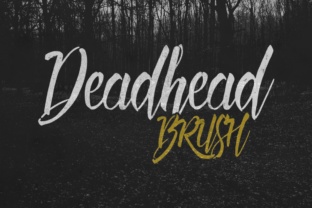
Deadhead Brush: A Bold and Natural Script for Creative Expression
Deadhead Brush is a unique script typeface that captures the essence of hand-lettering through the use of a traditional paint brush. Its irregular, rough edges and dynamic strokes give it a raw, organic feel that is difficult to replicate with digital tools alone. This font is ideal for those who want to add a touch of authenticity and creativity to their design projects.
What Makes Deadhead Brush Unique?
Unlike many other script fonts that are designed digitally, Deadhead Brush is crafted from actual hand-lettered work. The result is a typeface that feels alive, with variations in pressure, texture, and flow that mimic the natural imperfections of human handwriting. This makes it stand out in a world where most fonts are highly polished and uniform.
The font's jagged edges and uneven lines contribute to its distinctive character. These features make it perfect for designs that require a sense of energy, movement, or artistic flair. Whether you're working on a logo, poster, or social media graphic, Deadhead Brush can add a level of visual interest that other fonts simply cannot match.
Key Features of Deadhead Brush
- Handcrafted Design: Created using a traditional paint brush, this font brings a tactile quality to digital typography.
- Natural Texture: The irregularities in the strokes give it a realistic, organic appearance.
- Versatile Use: Suitable for both digital and print projects, including branding, packaging, and editorial design.
- Dynamic Flow: The fluidity of the letters adds a sense of motion and energy to any composition.
When to Use Deadhead Brush
Deadhead Brush is best suited for projects that benefit from a more expressive and unconventional style. It works particularly well in creative industries such as graphic design, advertising, and content creation. Its bold and unrefined look can be used to draw attention, evoke emotion, or convey a sense of authenticity.
For example, a designer might choose Deadhead Brush for a music festival poster to create a vibe that feels spontaneous and energetic. Similarly, a small business owner looking to establish a unique brand identity could use this font to differentiate their work from competitors who rely on more standard typography.
Real-World Applications
- Branding: Deadhead Brush can be used in logos, business cards, and promotional materials to create a memorable and distinctive visual identity.
- Editorial Design: In magazines, newspapers, or online publications, this font can be used for headlines or captions to add visual interest and a sense of personality.
- Social Media Content: With the rise of visual storytelling, Deadhead Brush can enhance posts, banners, and graphics to make them more engaging and eye-catching.
- Artistic Projects: Artists and illustrators may incorporate Deadhead Brush into their work to add a handwritten feel to illustrations, signage, or mixed-media pieces.
Who Can Benefit From Deadhead Brush?
Deadhead Brush is not just for professional designers—it can be valuable for anyone looking to infuse their work with a personal and creative touch. Students, hobbyists, and entrepreneurs can all find practical uses for this font in their respective fields.
For instance, a student creating a presentation or project might use Deadhead Brush to make their work stand out. A local artist looking to promote their gallery opening could use the font in posters or flyers to attract attention. Even a small business owner managing an online store might consider using Deadhead Brush in product descriptions or marketing materials to build a stronger connection with their audience.
Considerations and Limitations
While Deadhead Brush offers a lot of creative potential, it’s important to understand its limitations. Due to its handcrafted nature, the font may not be as legible in small sizes or when used extensively in long blocks of text. This means it’s best reserved for headings, titles, or short phrases rather than body copy.
Additionally, because of its irregular shapes and textures, Deadhead Brush may not pair well with every other font. Designers should experiment with different combinations to ensure that the overall composition remains balanced and readable.
Another consideration is the technical requirements. Some digital platforms or software may not render the font accurately, especially if it’s not properly embedded or licensed. Users should always check compatibility before incorporating Deadhead Brush into their projects.
How to Evaluate Suitability for Your Needs
Before deciding to use Deadhead Brush, it’s essential to assess whether it aligns with your project goals. Ask yourself questions like: What message am I trying to convey? What tone do I want to establish? How will the font interact with other design elements?
If your goal is to create something that feels authentic, expressive, and visually striking, then Deadhead Brush is likely a good fit. However, if clarity and consistency are more important, you may need to look for a more structured typeface.
Testing the font in different contexts is also a helpful step. Try using it in mock-ups, sample designs, or even on a website to see how it performs in real-world scenarios. This will give you a better sense of its strengths and limitations.
Final Thoughts on Deadhead Brush
Deadhead Brush is more than just a font—it’s a tool for creative expression that brings a human touch to digital design. Its unique characteristics make it a powerful choice for those who want to break away from conventional typography and embrace a more artistic approach.
Whether you’re a designer, a business owner, or someone with a passion for visual communication, Deadhead Brush offers a fresh and dynamic way to communicate your ideas. By understanding its purpose, features, and applications, you can make informed decisions about when and how to use it effectively.